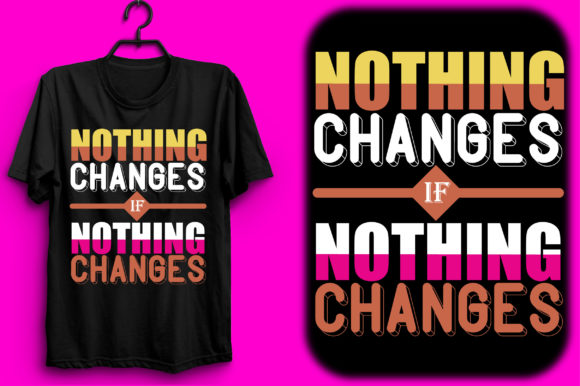
Nothing Changes: A Designer’s Take on a Statement Embroidery File
When a design lands in my library, I don’t just look at the preview. I think about the thread, the fabric, and the hands that will hold the finished piece. The phrase “Nothing Changes if Nothing Changes” arrived as a graphic, and it immediately got my attention. It’s not just text; it’s a statement, a nudge. That’s powerful for embroidery, where every stitch carries weight.
The Immediate Feel of the Design
This design has a clean, modern, and slightly minimalist personality. It’s bold without being loud. The layout feels balanced, and the words are presented clearly, which is excellent for embroidery where clarity is king. The mood it creates is introspective but action-oriented—perfect for a gift meant to inspire or for someone creating apparel that speaks to a personal journey. It’s not a whimsical doodle; it belongs on projects where the message is the centerpiece.
I imagined it stitched on a heavyweight cotton tote bag, something a client might use daily. The phrase isn’t fleeting decoration; it’s a reminder. That tells me this embroidery design has a place in personalized gifts, boutique mindfulness products, or even custom apparel for small teams or communities. The theme is universal, which means its application is wide, but it requires a thoughtful pairing with the right product.
Where This Embroidery File Thrives
In practical use, this design would perform beautifully on stable, flat surfaces with good fabric coverage. Think embroidered patches for jackets, the center panel of a pillow cover, or the front of a structured apron. For apparel, a high-quality sweatshirt or t-shirt made of a firm cotton blend would be ideal. The clean lettering would translate well into satin stitches or a crisp fill stitch, maintaining its authoritative yet friendly tone.
It’s also a strong candidate for baby items meant as keepsakes, like a framed nursery decor piece or a simple blanket, where the phrase speaks to a parent’s hope. As a holiday gift or a wedding gift, embroidered on a kitchen towel or a linen pillowcase, it becomes a meaningful heirloom. For small business merchandise, this kind of design adds value through its message—it elevates a simple tea towel or tote from a commodity to a conversation piece, which can enhance customer trust and engagement in a handmade shop.
From a commercial embroidery perspective, it’s a versatile digital asset. An Etsy seller could use it across a line of products, maintaining brand consistency. It works well in printable mockups for digital product previews because the message is easy to grasp. For craft fair products, an embroidered cap or bag featuring this phrase would likely draw people in, as it’s recognizable and relatable.
Considerations for a Successful Stitch
While the design is strong, its success depends on execution. On smaller hoop sizes, the detail level needs careful inspection. Tiny lettering can get lost if the stitch density is too high or the thread too thick. Always test it on scrap fabric first, matching your intended final material. This is not a design I would casually run on a stretchy knit without serious stabilizer consideration; the text could distort.
Dark fabric backgrounds require a thoughtful thread color contrast—a bright white or a metallic thread might be needed to keep the statement sharp. On curved surfaces like caps, the layout might need slight adjustment in your software to ensure the words sit flat visually. Also, consider the fabric texture: a very textured linen might break up the clean lines, whereas a smooth cotton would showcase them.
For products destined for frequent washing, like apparel or kitchen towels, ensure the stitch coverage is solid enough to withstand wear without the fill stitch fraying. Check those corners and connections in your test stitch.
Practical Notes for Your Embroidery Project
My standard process for a design like “Nothing Changes if Nothing Changes” involves a few key steps. First, I run it in a black and white mockup to see how the silhouette holds up—this is crucial for visual appeal on both light and dark backgrounds. I compare it on both in my software.
Second, I consider the thread palette. This message works in classic monochrome, but a subtle two-color scheme could add depth. Third, I confirm the hoop size I plan to use and review the file in my machine software to inspect small details before committing to a final product.
Finally, and this is vital for craft business and commercial embroidery projects: I always confirm the licensing terms of the digital embroidery file before selling finished items. The product description mentions SVG and DXF files for cutting machines, which is great for multi-method creators. But for embroidery, you’ll need to ensure you have the appropriate file format for your machine and clarity on whether commercial use is permitted. Don’t assume; check.
The Final Impression on a Finished Product
When stitched well, this design offers a clean, professional handmade presentation. It doesn’t shout; it resonates. That resonance increases its giftability and, for a small shop product, its perceived value. A customer seeing this on a tote bag isn’t just buying a bag; they’re buying a mantra. That connection is the real power of a good embroidery design.
For designers and makers, “Nothing Changes if Nothing Changes” is a straightforward but potent graphic. It asks you to pair it with the right fabric, the right stabilizer, and the right intention. When you do, it stitches up into a product that feels considered and substantial—the kind of work that builds a reputation for quality and thoughtfulness in your embroidery project.